Skip to content
Shovon

10+ businesses use Zagle to automate their daily operations

In Bangladesh, most businesses sell the same products across a website, Facebook, WhatsApp and a physical shop. Every channel needs someone managing it by hand. I co-founded Zagle with two teammates to automate that work. I run product and engineering, from deciding what to build to shipping it.

Shahriar Ahmed Shovon Co-founder, product engineer

Available from January 2027

Journey: One order, a gadget shop's last pair of wireless earbuds.

The earbuds are an example; every screenshot shows Zagle's real screens.

At a glance

Sales went through Zagle
$1M+
Paying businesses
10+
Role
Co-founder, product engineer
Timeframe
Sep 2025 – present
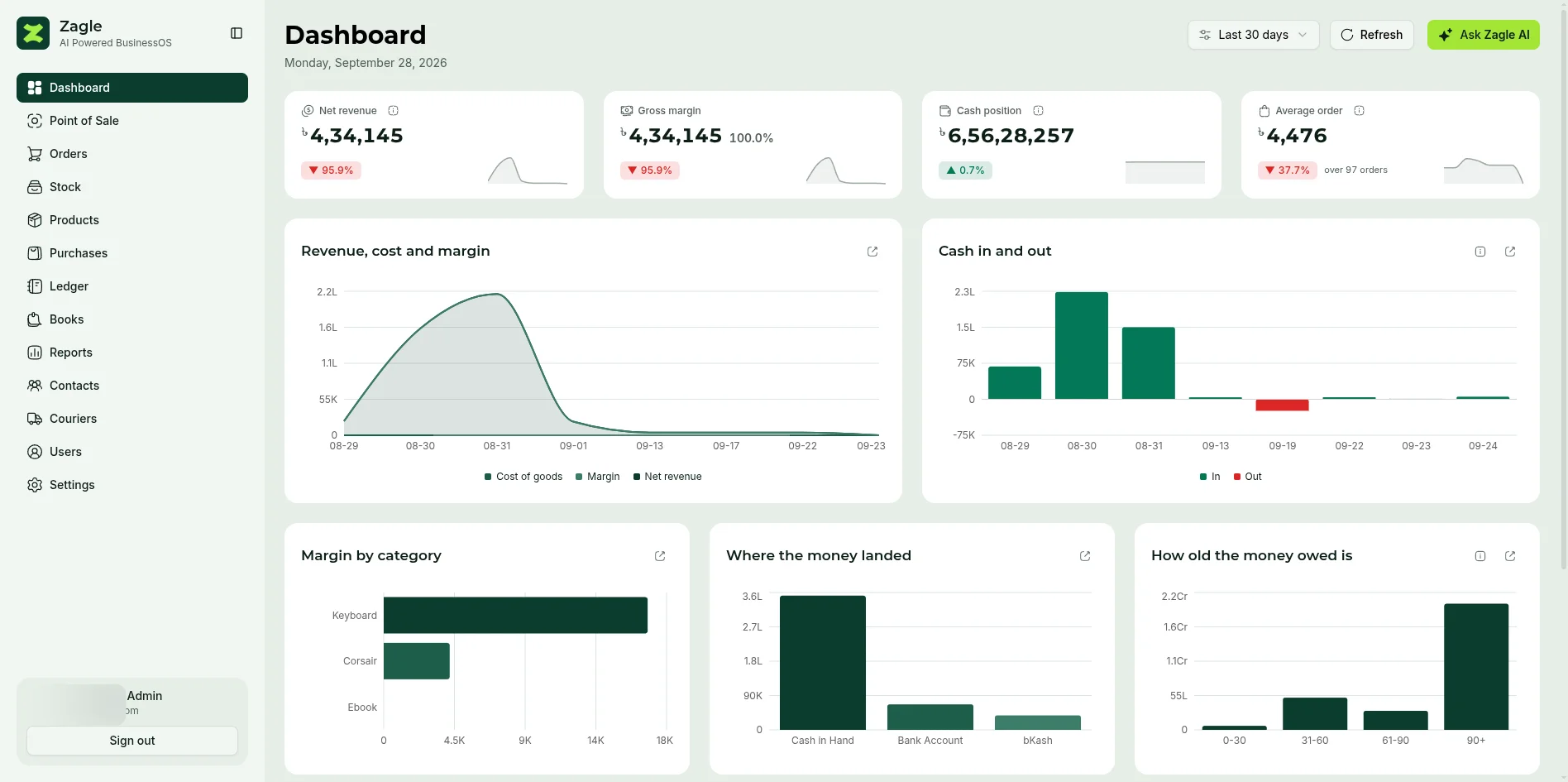
One day of a business on Zagle: orders, stock, couriers and books kept in sync in one place, with the typing done for the owner.

The problem

Selling online still meant running the business by hand

Our first version worked for one or two gadget shops but failed in other stores. So we spent full days in stores, talking to owners and staff and watching them work. Each job below needed its own people. Every time work changed hands, someone typed it again.

  1. Entering stock

    Stop 6
    Who does it
    One or two staff
    What it costs
    Each delivery waits to be typed in
    What goes wrong
    A challan arrives as a WhatsApp photo and is copied line by line
  2. Keeping stock right

    Stop 5
    Who does it
    One person per channel, each with their own view of stock
    What it costs
    Selling in three places is three jobs
    What goes wrong
    The last unit is promised on WhatsApp after it sold on the website
  3. Collecting orders

    Stop 1
    Who does it
    Staff jumping between browser tabs
    What it costs
    Time and people spent checking four places
    What goes wrong
    Nobody sees the day's orders together
  4. Knowing the customer

    Stop 2
    Who does it
    Nobody, since each channel keeps its own records
    What it costs
    No one can tell a new buyer from a returning one
    What goes wrong
    A buyer who once refused a delivery looks new
  5. Stopping fake orders

    Stop 3
    Who does it
    Nobody, since there is nothing to check against
    What it costs
    A courier fee for a parcel that earns nothing
    What goes wrong
    Refused cash-on-delivery parcels, a major source of losses
  6. Booking couriers

    Stop 4
    Who does it
    One or two staff on this alone
    What it costs
    Each order entered again in a courier's portal
    What goes wrong
    Every “where's my parcel?” call means logging back in
  7. Keeping the books

    Stop 7
    Who does it
    Staff with Excel and notebooks, then an accountant
    What it costs
    Reconciling by hand at the end of every day
    What goes wrong
    The year-end P&L waits for an accountant
  8. Knowing how it's going

    Stop 8
    Who does it
    The owner
    What it costs
    Filtering dashboards, noting and comparing by hand
    What goes wrong
    There is no way to just ask

The nine places staff kept open: WooCommerce admin · Facebook page · WhatsApp · Shop POS · Pathao · Steadfast · RedX · Excel · A notebook

A business can have ten people on dashboards all day and still do everything by hand. That's the work we want to remove.

Follow the shop's last pair of earbuds

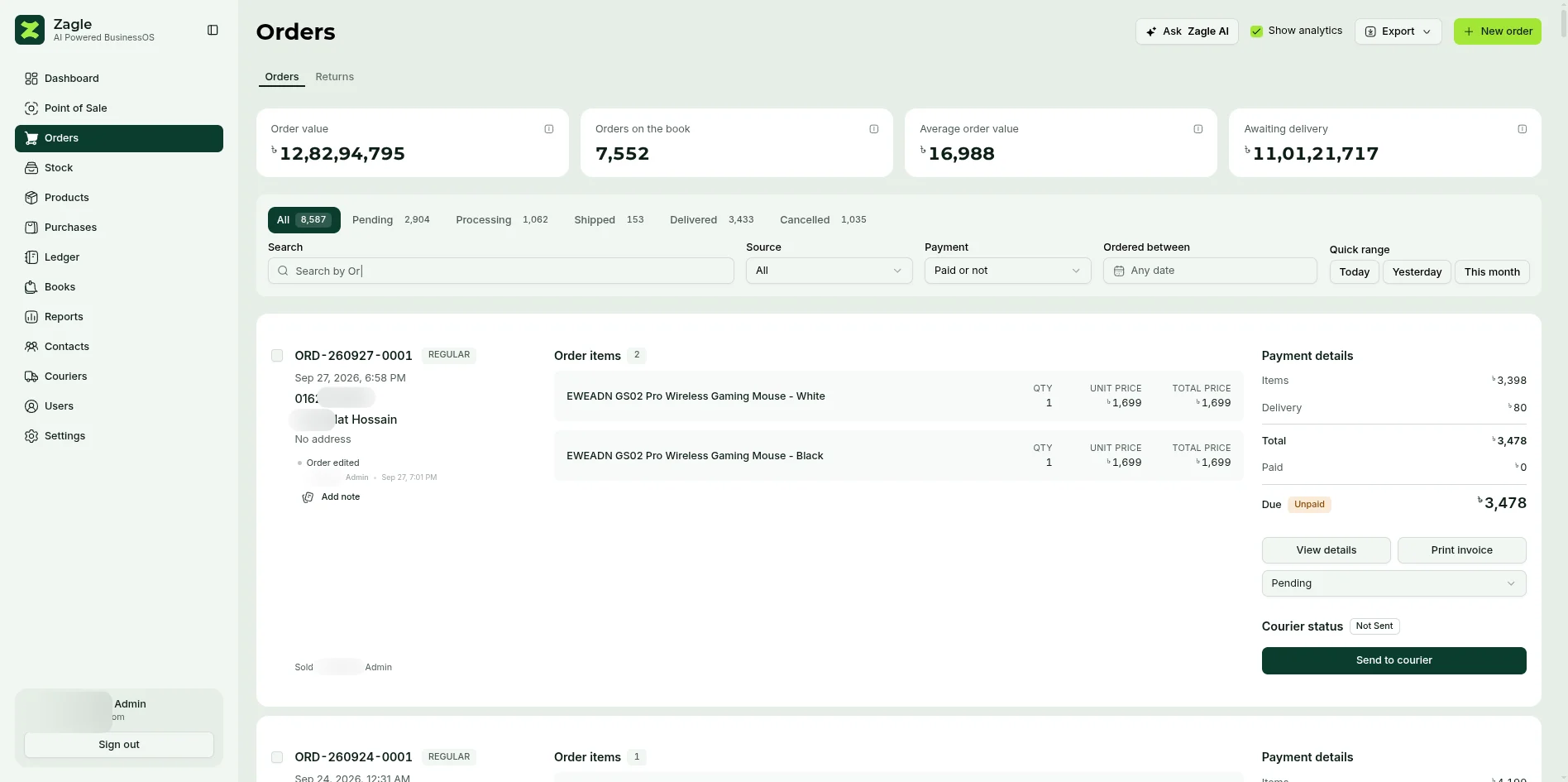
A customer messages a gadget shop on WhatsApp for its last pair of wireless earbuds. Eight things happen to that order once it is sent, and nobody retypes it anywhere.

Stop 1 The order arrives

A WhatsApp message becomes an order

The customer asks for the earbuds on WhatsApp, and Zagle turns the chat into an order by itself. Orders from the website, Facebook and the shop's counter land on the same page, so nobody copies anything over or goes looking for them.
Back to the problem

Stop 2 The buyer is recognised

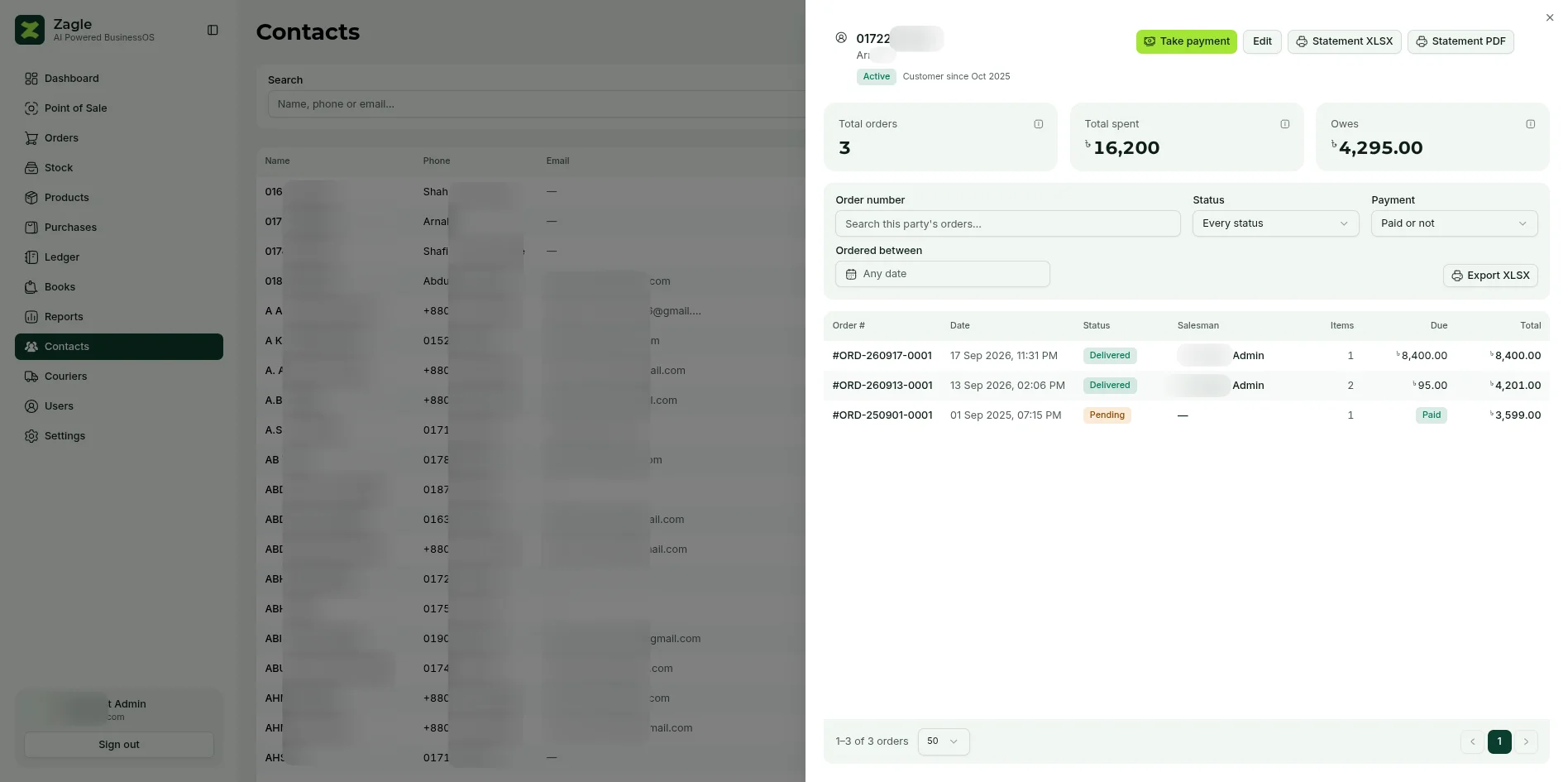
Zagle recognises the customer from a website order three months ago

Customers from every channel are merged by phone number. Today's WhatsApp message and that website order belong to one customer, with every past order and note beside the new one. Staff see at a glance that this is a returning buyer. Nobody searches Facebook or the website to find out.

Back to the problem

Stop 3 Fraud check

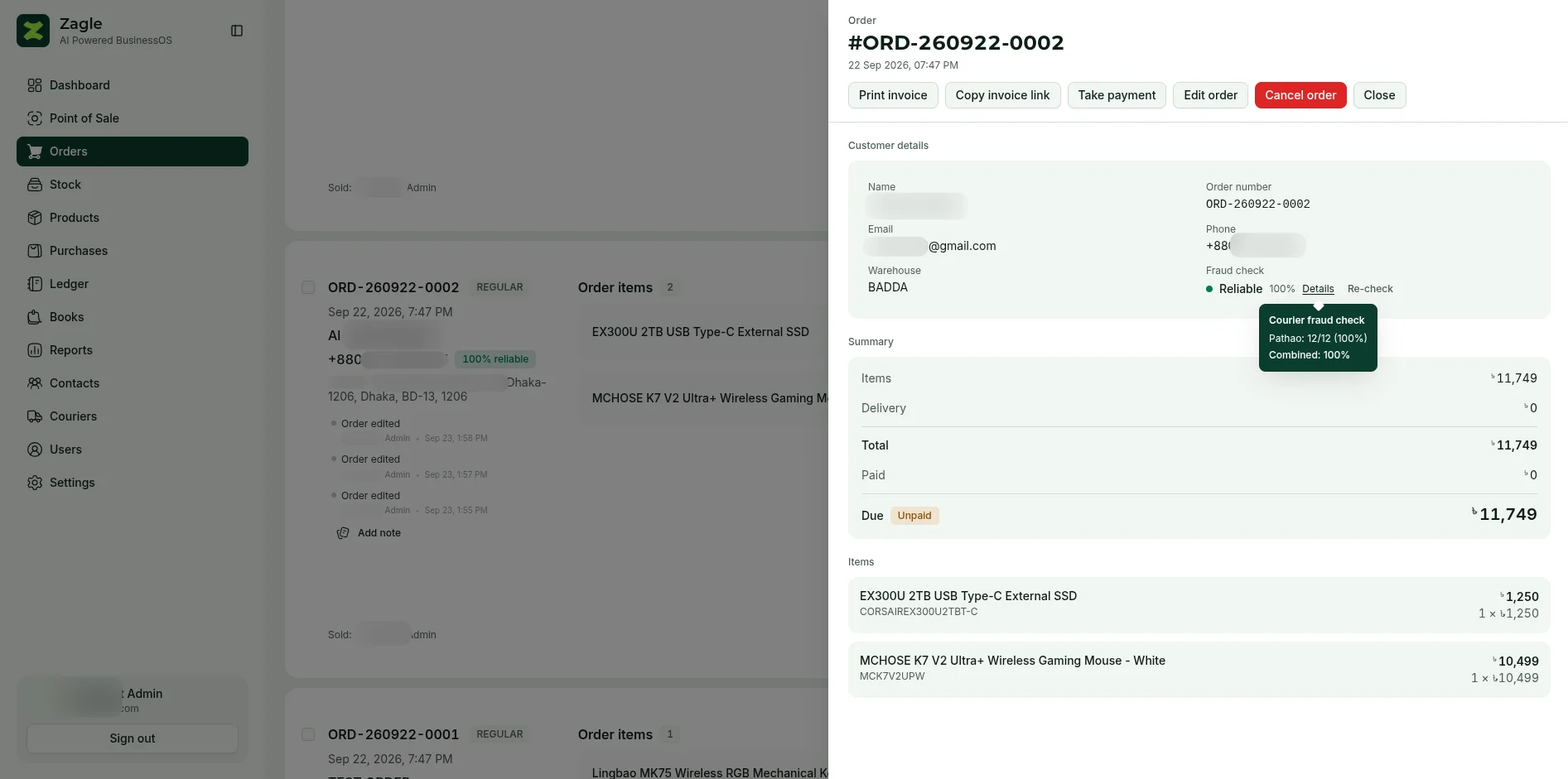
The buyer's delivery record is checked before anything ships

By the time staff open the order, it already shows the buyer's genuineness score: 92%. The score comes from that phone number's delivery record across all couriers. If a buyer looks risky, staff can ask for a partial advance before any courier fee is paid.

Back to the problem

Stop 4 Courier booked

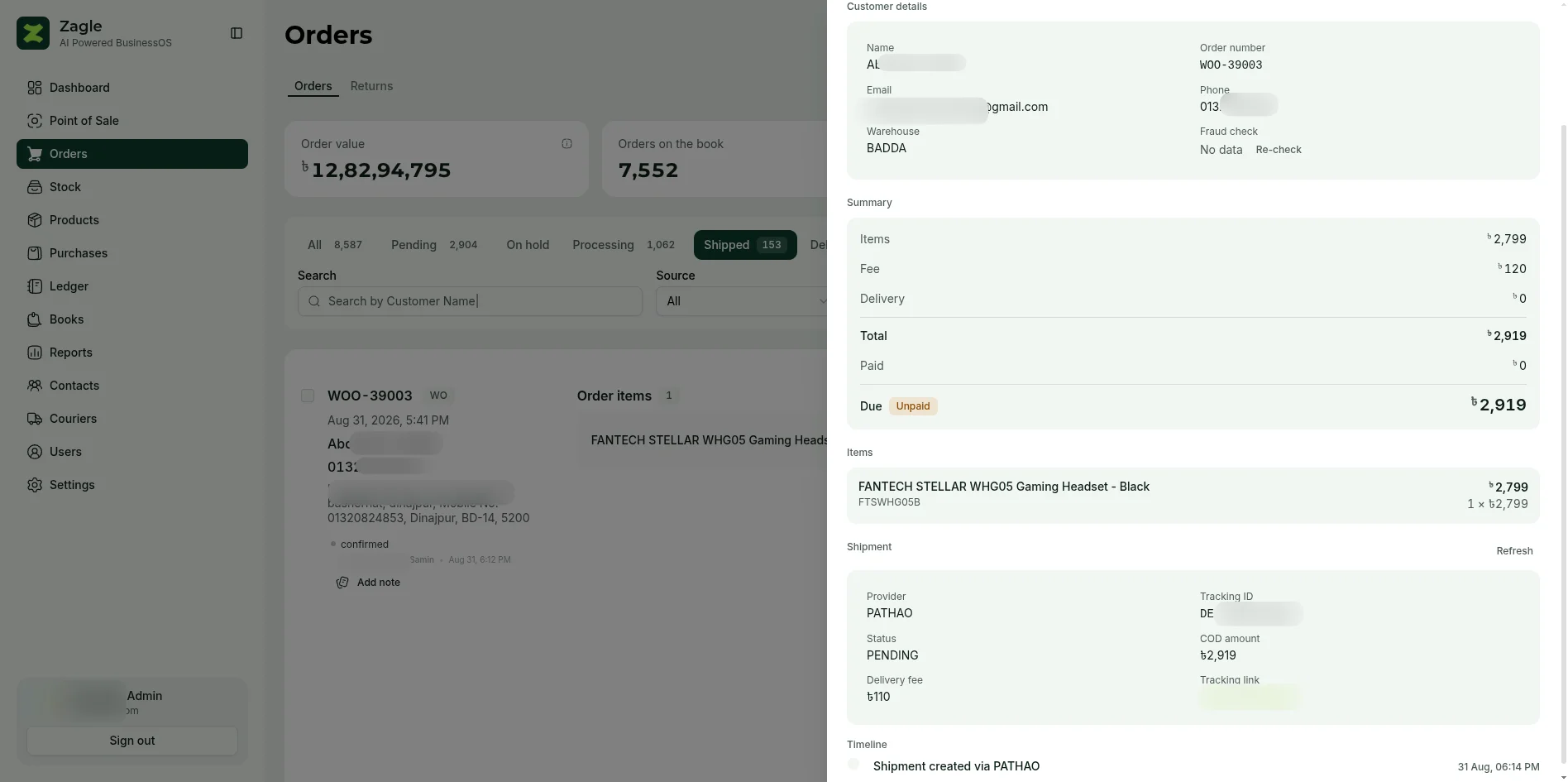
The parcel is booked with Pathao in one click

The shop connected its Pathao, Steadfast and RedX accounts once. Booking this parcel is one click on the order, with no merchant portal to open. Its delivery status then keeps itself up to date on the order. When the customer calls to ask about the earbuds, the answer is already there.

Back to the problem

Stop 5 Sold out everywhere

The last pair sells out on every channel at once

The website, the shop's POS, Facebook and WhatsApp share one stock count. This sale takes the earbuds to zero everywhere in the same moment. Nobody touches a channel's stock, and nobody can promise the same pair to someone else.

Back to the problem

Stop 6 Restocked from the challan

The restock's challan turns into stock

Zagle drafts the next purchase request from past orders, with the earbuds already on it. Staff add or remove items before sending it. The supplier's challan comes back as a WhatsApp photo or an Excel sheet. Zagle reads the products and quantities into stock, and staff only accept or revise what it read.

Back to the problem

Stop 7 Posted to the books

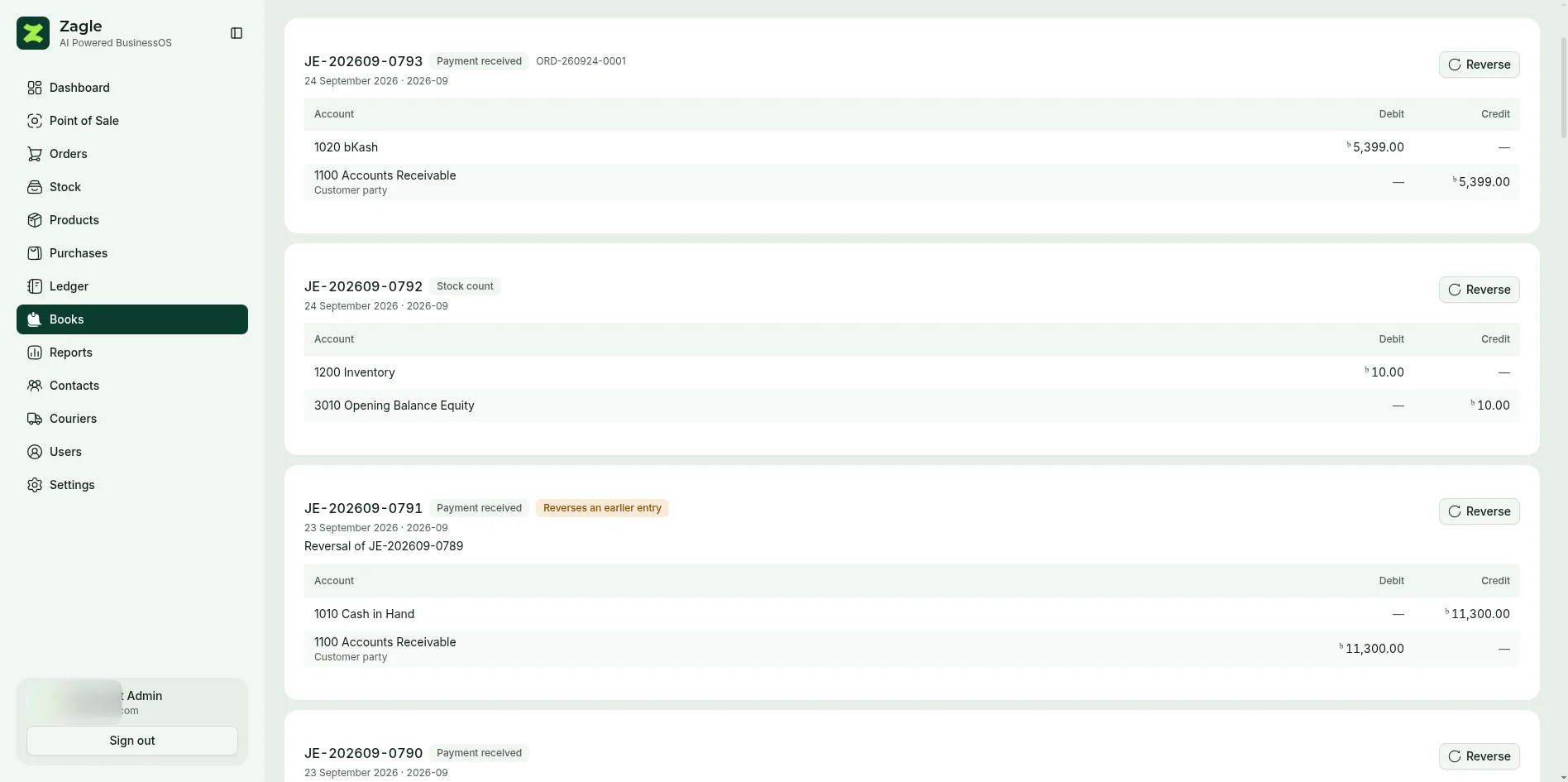
The sale, the courier fee and the supplier payment post to the books

Each one lands in a double-entry ledger as it happens, with nobody writing it down. Payments from every channel are reconciled there too. The ledger rejects unbalanced entries and allows no force-edits or deletes. At year end, the owner exports the P&L, balance sheet and stock sheet without an accountant.

Back to the problem

Stop 8 The owner asks

The owner asks Zagle AI how the week went

The question can be typed or spoken in plain language. The answer comes back in seconds, from the shop's own orders, stock and books. The same works for “my last ten website orders and what each customer bought”, or for comparing one month with the last.

Back to the problem

Two calls we made first

What we saw inside those businesses led to two calls that shaped everything above.

We built one product for every business.

Why
A fix made for one client can break the product for everyone else.
What it cost
Time, and hard talks with the few clients who wanted custom work.

We synced with the store they already run.

Why
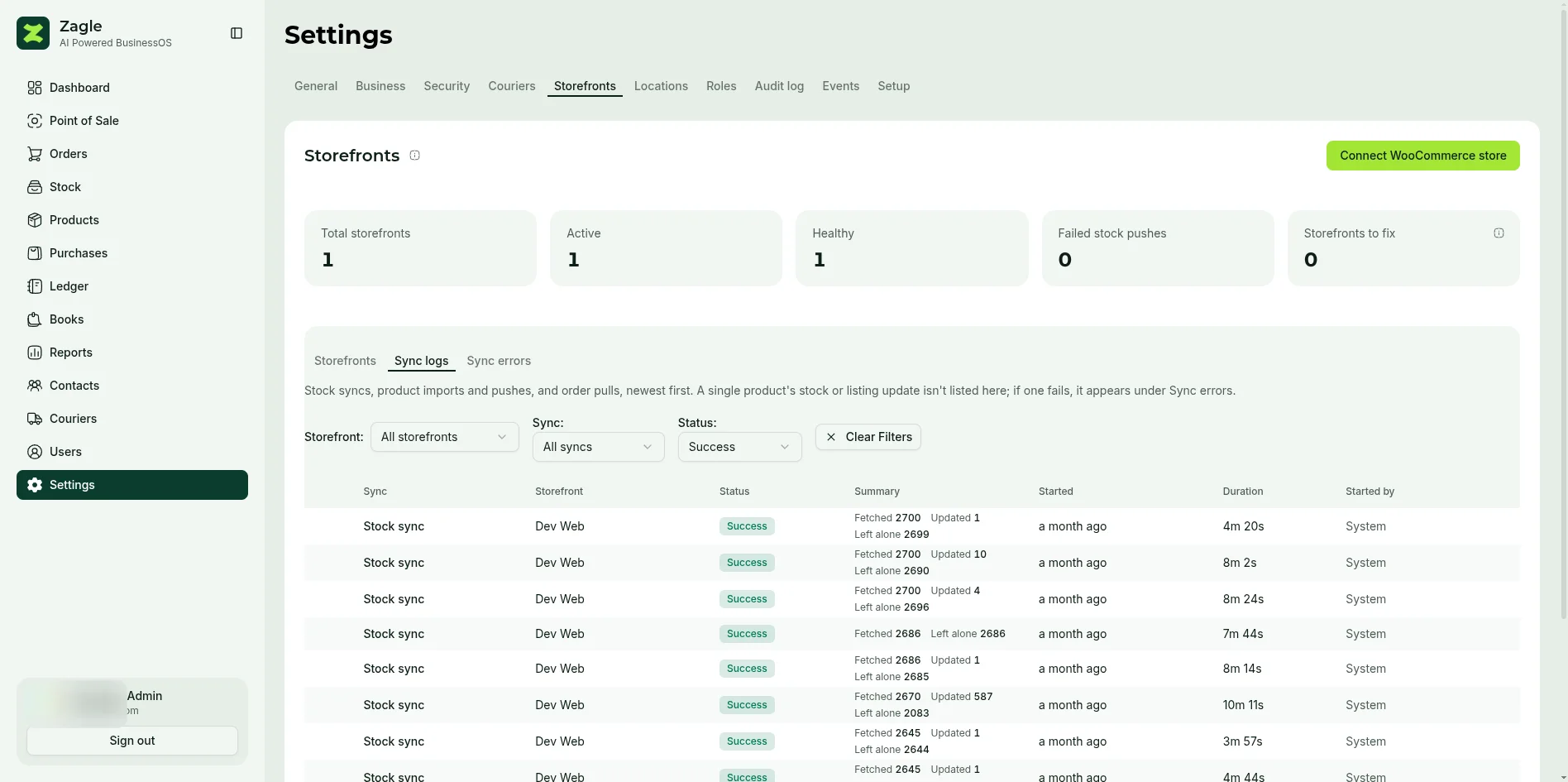
Most businesses already sell on a WordPress site with WooCommerce and don't want to move, so Zagle goes to them.
What it cost
It's much harder engineering. Both sides have to stay in step with no stopgap fixes, while we still ship fast.

What we chose not to build

Every request gets questioned first. We say it often in the team: “Often they have the right problem, but we have the right solution.”

  • A storefront of our own

    Businesses already had stores that sold, so a storefront wasn't the problem they faced. We may build one later.

  • AI features that only look good

    We didn't add AI because it feels cool. We asked how much users really needed each request. We used AI only where it takes a job off someone: reading chats and challans, and answering the owner's questions. Exploring the leverage continues.

  • Custom features for everyone at once

    When a client really wanted something, we built a minimal version just for them. Then we saw whether it worked. They told us whether they needed it.

Paying customers

Businesses pay for it, and most have stayed

  • 10+

    businesses paying for Zagle

  • 4–5 months

    retention period for most businesses

  • 1 year

    longest retention period

  • $1M+

    in sales processed through Zagle by its customers

We don't yet measure staff hours saved or oversells avoided. Businesses tracked neither before Zagle, so there's no baseline to compare with.

Next case study

Hiring a product engineer?

I can start full-time in January 2027 with no notice period. Email me, or forward this page to your team.

shovonshahriar01@gmail.com

Available from
January 2027
Notice
No notice period
Location
Dhaka, Bangladesh
Time zone · work
UTC+6 · Remote, on-site or relocation